


PLM, ALM and ELM — The battle of three letter acronyms
Organizations often grapple with managing different aspects of their operations. Three critical methodologies that have emerged to address these challenges are Product Lifecycle Management (PLM), Engineering Lifecycle Management (ELM), and Application Lifecycle Management (ALM). While they all aim to improve collaboration, efficiency, and productivity, they have distinct areas of focus. 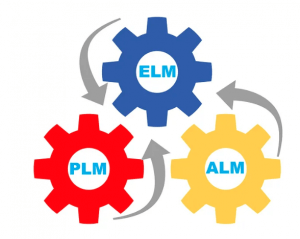
Understanding Product Lifecycle Management (PLM)
PLM is a strategic approach that manages the lifecycle of a product right from its inception, through design and manufacture, to service and disposal. Primarily used in industries like aerospace and automotive, PLM focuses on product engineering, involving processes like design, development, and production. The goal of PLM is to streamline product development processes and improve product quality by fostering collaboration among stakeholders.
Application Lifecycle Management (ALM)
ALM, on the other hand, focuses on managing the lifecycle of a software application. It is a key methodology in software development, encapsulating stages like requirements management, software design, coding, testing, and deployment. ALM revolves around three core concepts: governance, development, and management. The main objective of ALM is to manage and control software development processes, ensuring timely delivery and high-quality software applications.
Exploring Engineering Lifecycle Management (ELM)
IBM ELM is a comprehensive suite of tools designed to manage both hardware and software development processes across complex products. It brings under one umbrella the capabilities of traditional ALM and extends them to engineering processes as well. IBM ELM is designed to improve collaboration and productivity, offering a seamless integration of software and product development. It supports agile approaches and continuous improvement, catering to the evolving demand of industries where software is increasingly integrated into products.
Comparing PLM, IBM ELM & ALM: Similarities and Differences
PLM, ELM, and ALM all aim to enhance coordination and communication among stakeholders, yet they focus on different areas. PLM concentrates on products, ALM on software applications, and IBM ELM on both hardware and software components of a product. The key difference lies in their application — PLM is used more in traditional manufacturing industries, ALM in software development, and IBM ELM in industries where software is an integral part of the product.
The Advantage of ELM
IBM ELM stands out due to its comprehensiveness and integrated approach. It not only supports the management of application lifecycle like ALM but also extends to the overall engineering process, a trait more akin to PLM. This makes IBM ELM particularly advantageous in the digital age, where products are no longer purely mechanical or electronic but a complex blend of hardware and software. By enabling effective management of both these aspects, IBM ELM can significantly enhance collaboration, productivity, and competitiveness in an organization.
Combining your Product Lifecycle Management (PLM) system with IBM Engineering Lifecycle Management (ELM)
Reasons to consider this integration:
1. Streamlined Product Development Lifecycle:
— Enhanced Collaboration: Integrating PLM with IBM ELM facilitates seamless collaboration between cross-functional teams. This ensures that everyone involved in product development has real-time access to crucial information, fostering better communication and coordination.
— End-to-End Traceability: The integration provides end-to-end traceability across the entire product development lifecycle. From initial requirements through design, testing, and deployment, you can track and manage every stage, enhancing transparency and accountability.
2. Holistic Engineering Management:
— Focused Engineering Excellence: IBM ELM, being specifically engineered for the engineering domain, brings a specialized focus to your product development processes. By combining it with PLM, you ensure a more tailored and efficient approach to engineering tasks.
— Comprehensive Requirements Management: IBM ELM excels in requirements management. Integrating this strength with PLM ensures that requirements are seamlessly translated into the overall product development process, from design to deployment.
3. Centralized Data Management:
— Unified Data Repository: The integration allows for a centralized repository for all product-related data. This not only improves data accessibility but also ensures data consistency and integrity across the entire lifecycle.
— Efficient Document Management: Documents, CAD models, and specifications managed in PLM can be linked with engineering artifacts in IBM ELM, providing a comprehensive view of the product data and documentation.
4. Enhanced Decision-Making:
— Data-Driven Insights: The combined PLM and IBM ELM system enables better decision-making by providing comprehensive data and analytics. This empowers your teams to make informed choices based on real-time information, improving the overall quality of decisions.
— Risk Mitigation: With improved traceability and visibility, potential risks can be identified and addressed earlier in the product development process. This proactive approach helps in minimizing costly errors and delays.
5. Compliance and Quality Assurance:
— Regulatory Compliance: Integration helps to ensure that compliance requirements are seamlessly incorporated into the product development process. This is particularly crucial in industries with stringent regulatory standards.
— Quality Management: IBM ELM’s focus on quality management, combined with PLM, ensures that the final product meets the specified quality standards. This is essential for enhancing customer satisfaction and maintaining a positive brand image.
6. Adaptability and Future-Proofing:
— Scalability: Combining PLM and IBM ELM provides a scalable solution that can adapt to the evolving needs of your organization. As your product development processes grow, the integrated system can scale to accommodate increased complexity.
Combining PLM with ELM offers a synergistic approach that enhances collaboration, efficiency, and decision-making throughout the product development lifecycle. This integration not only streamlines processes but also positions your organization for future growth and adaptability in an ever-evolving business landscape.
To learn more about leveraging the value of PLM and IBM ELM contact us by visiting 321Gang. We work with enterprises to accelerate the engineering and development of large, engineered systems. 321Gang Consultants work with the industry-leading system builders of embedded software on best practices for requirements management, model-based systems engineering (MBSE), test management/verification and validation, and traceability for compliance and reporting. Visit our website or contact us to learn how we can improve your PLM solution with the addition of IBM ELM.

321Gang | 14362 North FLW | Suite 1000 | Scottsdale, AZ 85260 | 877.820.0888