
Moving FinOps Beyond Visibility
FinOps has historically focused on visibility and optimization.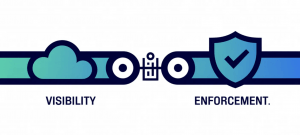
Dashboards.
Showback.
Chargeback.
Savings recommendations.
Commitment management.
But mature FinOps organizations eventually run into the same ceiling:
Visibility does not prevent overspend.
Optimization does not enforce policy.
Cloudability Governance is designed for what comes next.
It represents a shift from reactive cost management to proactive cost enforcement — embedded directly in engineering workflows.
The Core FinOps Problem
Even in advanced FinOps organizations:
- Engineers deploy infrastructure rapidly.
- Tagging policies drift.
- Approved instance families get bypassed.
- Budget thresholds are exceeded.
- Remediation happens after deployment.
Traditional cost tools tell you what happened.
They do not stop what shouldn’t happen.
Cloudability Governance addresses this gap.
What Cloudability Governance Actually Does
Cloudability Governance embeds cost estimation and policy enforcement directly into Infrastructure-as-Code workflows.
Currently supported at GA:
- AWS — Azure and others coming
- Terraform (HCP, Enterprise, Community, Terragrunt)
- GitHub integration — GitLab coming
- Terraform Run Task enforcement
At a strategic level, it provides three foundational capabilities:
1. Real-Time Cost Estimation Using Negotiated Rates
Unlike native estimators that rely on public list prices, Cloudability Governance calculates costs using:
- Actual negotiated AWS rates
- Enterprise discount structures
- Accurate pricing logic
This is critical for serious FinOps operations.
It means cost projections align with financial reality — not theoretical numbers.
Engineers see projected spend before infrastructure is deployed.
2. Policy Enforcement as Code
FinOps and Platform teams define policies such as:
- Mandatory tagging requirements
- Approved instance types
- Regional restrictions
- Resource type constraints
- Cost guardrails
- Compliance standards
These policies are enforced during Terraform runs.
Enforcement modes include:
- Advisory (warn only)
- Mandatory (block changes)
- Approval workflow required
This moves governance from documentation to automation.
3. Embedded Compliance Monitoring
Cloudability Governance centralizes:
- Policy adherence tracking
- Flagged and blocked changes
- Cost estimation history
- Compliance metrics
This creates an auditable record of enforcement, not just reporting.
For regulated industries or mature FinOps organizations, this matters significantly.
Who Benefits Most?
Developers / Cloud Engineers
- See real-time cost impact.
- Receive policy feedback during development.
- Avoid post-deployment escalations.
FinOps Teams
- Define governance policies centrally.
- Enforce rules automatically.
- Reduce manual review effort.
- Shift from reactive monitoring to proactive control.
Platform Teams
- Operationalize financial guardrails.
- Align infrastructure provisioning with enterprise policy.
Executives
- Reduce cost overruns.
- Increase budget predictability.
- Improve compliance confidence.
Why This Represents the “Run” Phase of FinOps
FinOps maturity typically evolves through:
Crawl → Visibility
Walk → Optimization
Run → Governance & Automation
Cloudability Governance lives in the “Run” phase.
It assumes:
- You already have cost visibility.
- You already understand where spend occurs.
- You now want to prevent non-compliant or wasteful infrastructure from being deployed in the first place.
This is a natural evolution for Cloudability Standard and Premium customers.
What Makes It Different From Existing Tools?
Cloudability Governance differentiates itself by:
- Using negotiated rates (not list pricing)
- Enforcing enterprise-wide policies
- Embedding checks into Terraform workflows
- Bridging engineering and FinOps via automation
- Centralizing governance dashboards
Competitors may provide cost reporting. Few provide embedded governance enforcement.
For FinOps Practitioners
FinOps started as a reporting discipline.
It is evolving into a governance discipline.
Cloudability Governance represents that evolution — moving cost awareness from dashboards to deployment workflows.
The future of FinOps isn’t just about understanding spend.
It’s about influencing infrastructure decisions before spend occurs.
Contact us at info@321gang.com.
321Gang | 14362 North FLW | Suite 1000 | Scottsdale, AZ 85260 | 877.820.0888