

Fix Your Workflow, Not Your Tool
Walk into almost any engineering organization and you’ll hear some version of this: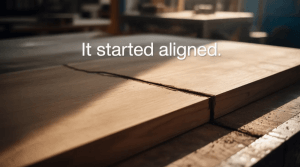

- “DOORS is slowing us down.”
- “Jama can’t scale.”
- “We’ve outgrown our requirements tool.”
- “We’re thinking about switching.”
It’s a familiar story. It’s also usually wrong.
The Tool Switching Trap
When delivery starts slipping or traceability breaks down, the instinct is to blame the tool.
So teams evaluate alternatives.
They run pilots.
They migrate data.
They retrain users.
And for a few months… things feel better.
Then the same issues come back:
- Requirements aren’t trusted
- Traceability is incomplete
- Testing isn’t aligned
- Teams are working in silos
Because the problem was never the tool.
It was the workflow around it.
What Actually Breaks in Engineering Teams
Across embedded systems, infrastructure, and complex product development, the failure points are remarkably consistent.
1. Requirements Are Isolated From Delivery
Requirements live in one system.
Code lives somewhere else.
Testing lives somewhere else.
The connections exist — but they’re manual, brittle, and often outdated.
This is especially common in environments where the requirements platform is optimized for:
- documentation
- collaboration
- review cycles
…but not tightly coupled to execution.
So when something changes:
- No one is sure what it impacts
- Engineers stop trusting the system
- Traceability becomes a checkbox exercise
2. Traceability Exists…Until It Matters
On paper, everything is linked:
- Requirements → Design → Test → Defects
In reality:
- Links are incomplete
- Updates are manual
- Validation happens right before audits
In tools that rely heavily on user-maintained relationships, this becomes almost inevitable at scale — something teams often experience in lighter-weight, collaboration-first platforms.
Traceability isn’t continuous — it’s reconstructed when needed.
3. Change Management Is Reactive
Changes don’t flow through a system.
They bounce between:
- emails
- meetings
- spreadsheets
And then eventually get reflected back into the requirements tool.
By that point:
- the system of record is behind
- impact analysis is guesswork
- teams rely on tribal knowledge instead of the platform
4. No Connection to How Work Gets Delivered
Many requirements platforms were introduced as systems of record.
Not systems of execution.
They’re strong at:
- structuring requirements
- enabling reviews
- supporting documentation
But weaker at:
- enforcing workflow
- driving downstream activity
- maintaining alignment with delivery systems
So engineering teams manage the real work somewhere else.
Where This Shows Up in Tooling
You’ll often see two patterns:
Pattern A: “Collaboration-First” Tools
- Fast to adopt
- Easy for teams to use
- Strong for reviews
But at scale:
- Traceability becomes fragile
- Process enforcement is inconsistent
- Teams rely on discipline over system
Pattern B: “Lifecycle-Centric” Platforms
- Stronger control over process
- Deeper traceability models
- Better alignment across lifecycle
They’re not always the easiest starting point — but they’re built to handle complexity.
This is where platforms like IBM Engineering Lifecycle Management / DOORS Next tend to stand out — not as a UI layer, but as a system designed to maintain relationships and rigor at scale.
What a Modern Engineering Workflow Looks Like
The teams getting this right didn’t find a better tool.
They changed how the system works.
- Requirements connected to delivery
- Traceability automated, not maintained
- Change flows through the system
- Tools integrated around workflow
Where Most Organizations Get Stuck
Most teams already have the right tools.
What they don’t have is:
- connected workflows
- enforced process
- integration across systems
So they end up with:
- tools in place
- process defined
- outcomes still broken
The Real Fix Isn’t a Migration
Switching tools might feel productive.
But it won’t fix:
- disconnected workflows
- manual traceability
- siloed teams
Those problems just follow you.
The Part Most Teams Miss
Requirements tools don’t fail because they’re incapable.
They fail because they’re disconnected from how engineering actually happens.
Fix the workflow — and the right platform will amplify it.
Ignore the workflow — and no platform will save you.
What Next?
At 321Gang, we don’t start with tools.
We start with how your engineering work actually flows:
- where traceability breaks
- where teams leave the system
- where delivery disconnects from requirements
Then we align:
- workflow
- tooling (including IBM ELM / DOORS Next)
- and real execution
If you’re considering a tool change, it’s worth validating whether the problem is actually the tool.
That conversation alone usually surfaces more value than a full migration.

321Gang | 14362 North FLW | Suite 1000 | Scottsdale, AZ 85260 | 877.820.0888